Four years later, try doing the same thing and the number of results obtained would definitely be a lot more. So what is all the hype about when it comes to blogging?
first person to Create a blog, Jorn Barger
(Source: Wired.com)

According to Jeff Javis, a ‘blogger’ himself and the director of the journalism program at the City University of New York’s Graduate School of Journalism, blogging is a phenomenon that allows ordinary people’s voices like you and I to be heard through online media. (Wortham, 2007)
Alternative journalism is what it is also referred as. Pruitt (2005) states that previously, one’s voice could be heard only through newspapers or a television network. However, now because of the existence of blogs, ordinary citizens can publish information and with a click of a button, online users anywhere in the world can view this information.
News that cannot be published in newspapers because of certain press laws could be published online through blogs.
Asians, particularly in Malaysia use blogging as a means to voice their opinions. Research shows that Malaysians are particularly interested in blogging about political matters. (Xinhua-PRNewswire, 2006)
Malaysians use this tool to vent their frustrations about the misgivings of the Malaysian government.
Crucial behind the scenes footage of the Hurricane Katrina not given coverage in traditional media was published online through blogs. (Wortham, 2007)
References
Blogging Phenomenon Sweeps Asia 2006, Xinhua-PRNewswire, viewed 10 November 2008,
http://www.prnewswire.com/cgi-bin/stories.pl?ACCT=104&STORY=/www/story/11-28-2006/0004480819&EDATE
Garfield, S 2004, New Kids on the Blog, Guardian, viewed 9 November 2008,
http://www.guardian.co.uk/technology/2004/apr/04/observerreview.britainuncovered
Pruitt, C 2005, The Blogging Phenomenon: Who? How? Why? , DDN, viewed 8 November 2008, http://www.digitaldivide.net/articles/view.php?ArticleID=86
Wortham, J 2007, After 10 Years of Blogs, the Future’s Brighter Than Ever, Wired.com, viewed 9 November 2008, http://www.wired.com/entertainment/theweb/news/2007/12/blog_anniversary
Classification of Blogs
Blogs that myself and other students alike might be more familiar with are blogs which have a more personal touch to them. These blogs are usually online personal diaries that are written to share personal experiences. I personally prefer reading such types of blogs, however, according to Pruitt (2005), a blog does not necessarily have to be about personal experiences; it could focus on a particular area of interest, such as fashion or business written by one author and it can also focus on a particular subject where many different authors come together and publish their thoughts about the issue, hence forming a blogging community. One such example is the technology blog, Slashdot.
Technorati (2008) lists several categories in which blogs can fall under. A few of these are:
i)Entertainment
ii)Sports
iii)Politics
iv)Business
v)Technology
Apart from the earlier mentioned example of a blogging community, there are other popular communities. One example is the Global Voices Community, where bloggers from developing countries come together to voice their opinions about certain issues affecting their country through their blogs that are published on this online community, in an effort to get mainstream media to hear them out. (White, 2006)
 (Source)
A blogging community can be created by tagging blog posts so that they are accessible by others allowing them to read. Also, a comment section can be created inviting others to comment. (Technorati, 2008)
References
Blog directory 2008, Technorati, viewed 10 November 2008,
http://technorati.com/blogs/directory
Pruitt, C 2005, The Blogging Phenomenon: Who? How? Why? , DDN, viewed 8 November 2008, http://www.digitaldivide.net/articles/view.php?ArticleID=86
State of the Blogosphere, Technorati, viewed 10 November 2008, http://www.technorati.com/blogging/state-of-the-blogosphere/the-how-of-blogging/
White, N (2006) ‘Blogs and community: launching a new paradigm for online community?’, The Knowledge Tree, viewed 10 November 2008, http://kt.flexiblelearning.net.au/tkt2006/edition-11-editorial/blogs-and-community-%E2%80%93-launching-a-new-paradigm-for-online-community
Designing for Online vs. Print
According to Nielsen (1999), what would be a great format for print design wouldn’t necessarily be the ideal format for a web design. This basically means that different approaches need to be taken in order to be able to design efficiently for both mediums.
Similarly, an online version of a newspaper will be different from a hard copy of the same publication.
You wouldn’t expect the same long text that appears in a print version of a newspaper to appear in the online version. This is because readers tend to be impatient and wouldn’t want to read long chunks of text on the computer screen. Instead, what they do is scan over the text picking out key phrases or sentences that would give them a gist of the article. (Nielsen, 1997)
According to Walsh (2006, p.32), the use of hyperlinks on a website is meant for the purpose of segmenting the information into framed sections so that a reader can choose exactly what he/she wants to read.

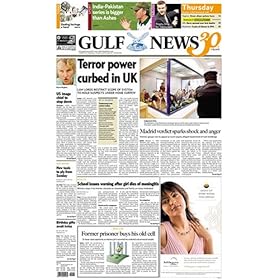
Print design uses the three layout systems; information value where elements placed on the left is known as Given and is known to the reader, elements placed on the right is known as New and is new information to the reader and salience and framing by using different means to attract the reader’s attention.(Kress & van Leeuwen, p.4-5,1998)
References
Kress, G & van Leeuwen, T 1998, ‘Front Pages: (The Critical) Analysis of Newspaper Layout’, Approaches to media discourse, Blackwell, Oxford
Nielsen, J 1997, Writing for the Web, Alertbox, viewed 10 November 2008, http://www.useit.com/alertbox/9703b.html
Nielsen, J 1999, Differences Between Print Design and Web Design, Alertbox, viewed 10 November 2008, http://www.useit.com/alertbox/990124.html
Walsh, M. 2006, ‘Textual shift’: Examining the reading process with print, visual and multimodal texts, Australian Journal of Language and Literacy, vol.29, no.1, p.24-37. (UNISA electronic library)
New Media Trends
It is evident that the digital revolution is having a considerable impact on our lives and shaping the way we think.
This fact was proven during the United States 2008 Elections when the presidential candidate, Barack Obama, now the United States President Elect used digital media to reach as many voters as possible for his campaign by appearing on You-tube commercials, creating web pages on social networking websites such as Facebook and introducing the Obama I-phone application. (Lieberman, 2008)
According to Wright Jr. (2008), a large number of people are using new forms of media to obtain the latest information.
New forms of media include:
i) Blogs
ii) Webcasts
iii) Podcasts
iv) Video Blogs
v) Social Networking websites
vi) Discussion groups
vii) RSS Feeds
During the US Elections, even though traditional media such as television, radio and newspapers produced a great deal of coverage of the event, virtual communities and bloggers played a huge role in the way this event was viewed worldwide. (Gollis, 2008)
References
Gollis, A 2008, New Media and the US Election, BBC News, viewed 9 November 2008, http://news.bbc.co.uk/2/hi/uk_news/7705280.stm
Lieberman, S 2008, Youth and the Web: The Political Campaign Game-Changer, TechNewsWorld, viewed 9 November 2008, http://www.technewsworld.com/story/64643.html?wlc=1226555031
Wright Jr, N 2008, New Media/Web 2.0, Dimension X, viewed 9 November 2008, http://dxadvertising.com/dxintel/dxarticles/48-new-media-and-web-20
__________________________________________


No comments:
Post a Comment