I always thought blogs were trivial and splashed out a lot of information about people’s private lives on the Internet for everyone to read about. Never in a million years did I think that I would ever set up a blog, but here I am and proud of what I have achieved.
I have learnt that blogs are not just about people posting about their personal lives. While I was setting up this blog, I discovered a lot of other blogs on the Internet where bloggers posted about issues that were close to their heart.. I have also discovered that through blogs, people of similar interests can actually come together.
To set up a webblog, one does not need to be an expert in knowing about the technalities of the Internet. You don’t need to have extra knowledge about a certain software, which is the case when one would like to set up a website.There are many blogging hosts on the Web that provides users with step by step instructions on how to set up a blog.
Even though the Internet is an open space with no regulations, unlike mainstream media, bloggers should ensure that they approach sensitive issues with care so as not to offend anyone.
Thursday, November 13, 2008


Harry Potter Fever
I am not really one of those die-hard Harry Potter fans so naturally I wouldn’t be interested to know about the happenings in the world of Harry Potter but one such incident that I read about in the papers sparked my interest because it talked about the whole copyright issue regarding the publication of the Harry Potter encyclopaedia. To begin with, let me start with a bit of a background of the Harry Potter books.
The first of a series of Harry Potter books by the author J.K. Rowling which is about a boy-wizard was published in 1997 and created so much hype and craze among children and adults all over the world. (Pooley, 2007)
The first of a series of Harry Potter books by the author J.K. Rowling which is about a boy-wizard was published in 1997 and created so much hype and craze among children and adults all over the world. (Pooley, 2007)
 J. K. Rowling
(Source: Associated Press)
According to the Telegraph (2008), one of these websites was the Harry Potter Lexicon website created by Mr. Vander Ark which contained essays by fans about different topics and information about the different spells that were mentioned in the Harry Potter books. J.K. Rowling has always been one to praise such initiatives created by her fans and she even went so much as to award Mr. Ark one of her ‘fan awards’.

(Source: CNN.com)
However, Rowling was not too happy when she found out that Ark had plans to publish a Harry Potter encyclopaedia. She sued the publication responsible for publishing the book, RDR Books on the grounds of ‘copyright infringement’. (CBS, 2008)
According to Reep (2006 p.41), copyright infringement occurs when someone utilises the original works of a creator for their own interest and benefit without ‘getting permission’...
Rowling did eventually win the lawsuit, therefore blocking publication of the encyclopaedia, however, Ark and the publishing house; RDR Books believe the book shouldn’t be blocked from publication and they are even considering an appeal since they believe that the book was protected by the ‘fair use’ doctrine which basically allows one to publish critiques of literary works.(Chinnici, 2008)
References
Chinnici, C 2008, Judge blocks ‘Harry Potter Lexicon’, CNN.com, viewed 13 November 2008, http://edition.cnn.com/2008/SHOWBIZ/books/09/08/harry.potter/index.html
Facts about the Harry Potter Lexicon Website 2008, Telegraph, viewed 13 November 2008, http://www.telegraph.co.uk/news/uknews/1895676/Facts-about-the-Harry-Potter-Lexicon-website.html
‘Harry Potter’ Author Wins Copyright Claim 2008, CBS News, viewed 13 November 2008, http://www.cbsnews.com/stories/2008/09/08/entertainment/main4426302.shtml
Pooley, J.D. 2007, Harry Potter, New York Times, viewed 13 November 2008, http://topics.nytimes.com/top/reference/timestopics/complete_coverage/harry_potter/index.html?inline=nyt-classifier
Reep, DC 2006, Technical Writing: Principles, Strategies, and Readings, 6th edn, Pearson Education, USA.
Rich, M 2008, Rowling to Testify in Trial Over Potter Lexicon, New York Times, viewed 13 November 2008, http://www.nytimes.com/2008/04/14/books/14potter.html
__________________________________________
Wednesday, November 12, 2008
New Era for Political Campaigns
Can digital media transform the way political campaigns are run? Possibly. At least that is what we saw with this year’s United States presidential elections.
The candidates moved away from the traditional method of promoting and marketing themselves through television, radio and newspapers and focused more on promoting themselves via new forms of media. John McCain and Barack Obama used digital media in the form of blogs, You-tube commercials and social networking websites such as Facebook to reach out to the people of America. This is because they know that younger voters from this generation are tech-savvy and use the Internet as a major tool to obtain their information, therefore, they felt that the best way to get through to them is to try to be tech-savvy themselves. (Lieberman, 2008)
Barack Obama went one step further and introduced the Obama I-phone application to promote his campaign and reach a maximum number of voters as possible.
This application uses the user’s phone as a form of a contact book to mark all the contacts that the user has in states such as Virginia, Colorado and North Carolina and in turn, this information is used by the campaigners. (Stern, 2008)
According to Jason Grigsby, one of the project leaders of Obama’s political campaign, mobile technology could really help in promoting the campaign. Also, the campaign provides frequent updates regarding the campaign, spreads pictures and videos to encourage more voters. (Sheils, 2008)
The candidates moved away from the traditional method of promoting and marketing themselves through television, radio and newspapers and focused more on promoting themselves via new forms of media. John McCain and Barack Obama used digital media in the form of blogs, You-tube commercials and social networking websites such as Facebook to reach out to the people of America. This is because they know that younger voters from this generation are tech-savvy and use the Internet as a major tool to obtain their information, therefore, they felt that the best way to get through to them is to try to be tech-savvy themselves. (Lieberman, 2008)
Barack Obama went one step further and introduced the Obama I-phone application to promote his campaign and reach a maximum number of voters as possible.
This application uses the user’s phone as a form of a contact book to mark all the contacts that the user has in states such as Virginia, Colorado and North Carolina and in turn, this information is used by the campaigners. (Stern, 2008)
According to Jason Grigsby, one of the project leaders of Obama’s political campaign, mobile technology could really help in promoting the campaign. Also, the campaign provides frequent updates regarding the campaign, spreads pictures and videos to encourage more voters. (Sheils, 2008)

(Source: Podxasting News)
The use of new media by Obama’s campaign had a great influence in the results of the election and could have possibly revolutionised the way future campaigns will be run. (Lewin, 2008)
Obama '08 IPhone Application
References
Lewin, J 2008, How Barack Obama Beat John McCain With New Media, Podcasting News, viewed 13 November 2008, http://www.podcastingnews.com/2008/11/05/how-barack-obama-beat-john-mccain-with-new-media/5/
Lieberman, S 2008, Youth and the Web: The Political Campaign Game-Changer, TechNewsWorld, viewed 13 November 2008, http://www.technewsworld.com/story/64643.html?wlc=1226555031
Shiels, M 2008, Obama uses iPhone to win support, BBC News, viewed 13 November 2008, http://news.bbc.co.uk/2/hi/technology/7649753.stm
Stern, C 2008, Obama Counts on Text Messages to Drive Turnout of Youth, Blacks, Bloomberg.com, viewed 13 November 2008, http://www.bloomberg.com/apps/news?pid=washingtonstory&sid=av91P3tyvybU
__________________________________________
Possible End to Music Piracy?
A lot of us are guilty of downloading music content online illegally for obvious reasons of course; the songs are free of charge and are available in the cyber world before the albums are even launched in the real world.
According to a study conducted by the United States National Bureau of Economic Research by, the increase in the number of people resorting to the Internet to download songs is causing a huge drop in record sales.(BBC,2004)
In an effort to curb music piracy, the record companies; Universal Music, Sony BMG, EMI and Warner Music have teamed up with Nokia under its Comes With Music brand to launch a phone that will enable music lovers to download music either on their mobile phone or to their desktop. (Sabbagh, 2008)
According to a study conducted by the United States National Bureau of Economic Research by, the increase in the number of people resorting to the Internet to download songs is causing a huge drop in record sales.(BBC,2004)
In an effort to curb music piracy, the record companies; Universal Music, Sony BMG, EMI and Warner Music have teamed up with Nokia under its Comes With Music brand to launch a phone that will enable music lovers to download music either on their mobile phone or to their desktop. (Sabbagh, 2008)
'Comes with Music' phone
(Source: TechRadar UK)

In this way, download of music will not be illegal as consumers are actually paying for the music by subscribing to the phone and in turn, record companies are getting their profits back.
In a press release by Nokia, Tero Ojanpero, executive vice-president and head of Nokia entertainment and communities business, confirmed that through the Comes With Music brand, music lovers will be able to enjoy unlimited access to songs of their choice free of charge for one whole year and at the end of the year, they get to keep the downloaded music content for life. (Nokia, 2008)
Music lovers can download music of their choice anywhere and at any point of time. This form of selling music through digital media is best described by Naughton(2006) as the ‘push’ and ‘pull’ medium; wherein push forced us to be passive audiences and take in whatever content that was provided to us, and pull that allowed audiences to take lead and actually choose the content that they prefer or that is relevant to them, which is the situation now.
Several record companies have also signed up with the social networking website, MySpace, to allow their songs to be sold on the website, thus enabling artists to actually make profits out of their albums. (Hefflinger, 2006)
However, artists such as Madonna and Radiohead are not in favour of selling their music online as they are still skeptical about whether their music will be protected from piracy. (Harmon, 2002)
With the Comes With Music phone, record labels are hoping this will be kept to a minimum, as consumers will not be able to perform peer-to-peer music downloads.(Hartley, 2008)
References
Harmon, A 2002, Copyright Hurdles Confront Selling of Music on the Internet, New York Times, viewed 12 November 2008, http://query.nytimes.com/gst/fullpage.html?res=9407E2DC1739F930A1575AC0A9649C8B63&sec=&spon=&pagewanted=1
Hartley, A 2008, Unlimited mobile music will combat P2P piracy, TechRadar UK, viewed 12 November 2008, http://www.techradar.com/news/phone-and-communications/unlimited-mobile-music-will-combat-p2p-piracy-471719
Hefflinger, M 2006, Snocap to Enable Artists to Sell Songs on MySpace, Digital Media Wire, viewed 11 November 2008, http://www.dmwmedia.com/news/2006/09/06/snocap-to-enable-artists-to-sell-songs-on-myspace
Music piracy ‘does hit CD sales’ 2004, BBC News, viewed 12 November 2008, http://news.bbc.co.uk/2/hi/entertainment/3995885.stm
Naughton, J 2006, The age of permanent net revolution, Guardian, viewed 11 November 2008, http://www.guardian.co.uk/business/2006/mar/05/newmedia.broadcasting/print
Ojanpero, T (Executive Vice-President & Head of Nokia entertainment and communities business) 2008, Nokia launches pioneering ‘Comes With Music’ digital entertainment service, media release, 2 October, Nokia, viewed 12 November 2008, http://www.nokia.com/A4136001?newsid=1256586
Sabbagh, D 2008, Nokia offers unlimited music for one-off fee, Australian IT, viewed 12 November 2008, http://www.australianit.news.com.au/story/0,24897,24440421-15306,00.html
__________________________________________
Tuesday, November 11, 2008
Emoticons-New form of communication
I must admit many a times that I’ve received an email or a text message, I would wonder what the person on the other side was trying to say or in some cases I would interpret it in a completely different way. Now this ignorance on my part has nothing to do with the sender not bringing out the message clearly.
According to Byron (Funell, 2007), when it comes to communicating by email, people have a lot of confidence in the way they interpret the message that they receive. They read too much into the matter; make assumptions and therefore misunderstanding the whole point behind what the sender is trying to say.
According to Byron (Funell, 2007), when it comes to communicating by email, people have a lot of confidence in the way they interpret the message that they receive. They read too much into the matter; make assumptions and therefore misunderstanding the whole point behind what the sender is trying to say.
This theory was proven by John Kruger and his colleague Nicholas Epley from the University of Chicago, who carried out a research to find out the reason behind email miscommunication. It was found that people usually misinterpret the tone of the messages they receive and this is due to their egos where they do not want to let go of their own perceptions and try to understand what the sender might actually be trying to say. (Winerman, 2006)
Email communication is a method widely used around the world because it is fast and efficient to get the message across. But, if everyone’s going to be misinterpreting the messages they receive, there would be a serious problem.
This is what prompted American professor Scott E. Fahlman to come up with what is now called as an emoticon. When communicating by email, one does not have the luxury of having body language or the tone of voice to make out what the other person is trying to say. So, he came up with the idea of using characters or emoticons in a message to indicate the tone of the message. So, if a message was intended to be funny, the character :-) would be used. Similarly, if the message was a bit more serious, the character :-( would be used. (Fahlman, n.d.)
 Different types of emoticons
(Source: New York Times)
The use of emoticons can be thought of as a bit childish but it could also help when sending business emails as there cannot be room for any misinterpretation when sending such mails. (Kallos, 2008)
References
Fahlman, S n.d., Smiley Lore :), Scott E. Fahlman’s Homepage, viewed 11 November 2008, http://www.cs.cmu.edu/~sef/sefSmiley.htm
Funell, A(2007), Emoticons and email etiquette, ABC Radio National, viewed 12 November 2008, http://www.abc.net.au/rn/mediareport/stories/2007/2064342.htm
Kallos, J (2008), Emoticons in Business E-mail, Business E-mail Etiquette, viewed 11 November 2008, http://www.businessemailetiquette.com/?p=293
Winerman, L (2006), E-mails and egos, APA Online, viewed 11 November 2008, http://www.apa.org/monitor/feb06/egos.html
__________________________________________
Monday, November 10, 2008
Blogging -The Current Online Phenomenon
In April 2004, a user could have keyed in the word ‘blog’ on the Google search engine and about 28,600,000 results could have been retrieved. (Garfield, 2004)
Four years later, try doing the same thing and the number of results obtained would definitely be a lot more. So what is all the hype about when it comes to blogging?
Four years later, try doing the same thing and the number of results obtained would definitely be a lot more. So what is all the hype about when it comes to blogging?
first person to Create a blog, Jorn Barger
(Source: Wired.com)

According to Jeff Javis, a ‘blogger’ himself and the director of the journalism program at the City University of New York’s Graduate School of Journalism, blogging is a phenomenon that allows ordinary people’s voices like you and I to be heard through online media. (Wortham, 2007)
Alternative journalism is what it is also referred as. Pruitt (2005) states that previously, one’s voice could be heard only through newspapers or a television network. However, now because of the existence of blogs, ordinary citizens can publish information and with a click of a button, online users anywhere in the world can view this information.
News that cannot be published in newspapers because of certain press laws could be published online through blogs.
Asians, particularly in Malaysia use blogging as a means to voice their opinions. Research shows that Malaysians are particularly interested in blogging about political matters. (Xinhua-PRNewswire, 2006)
Malaysians use this tool to vent their frustrations about the misgivings of the Malaysian government.
Crucial behind the scenes footage of the Hurricane Katrina not given coverage in traditional media was published online through blogs. (Wortham, 2007)
References
Blogging Phenomenon Sweeps Asia 2006, Xinhua-PRNewswire, viewed 10 November 2008,
http://www.prnewswire.com/cgi-bin/stories.pl?ACCT=104&STORY=/www/story/11-28-2006/0004480819&EDATE
Garfield, S 2004, New Kids on the Blog, Guardian, viewed 9 November 2008,
http://www.guardian.co.uk/technology/2004/apr/04/observerreview.britainuncovered
Pruitt, C 2005, The Blogging Phenomenon: Who? How? Why? , DDN, viewed 8 November 2008, http://www.digitaldivide.net/articles/view.php?ArticleID=86
Wortham, J 2007, After 10 Years of Blogs, the Future’s Brighter Than Ever, Wired.com, viewed 9 November 2008, http://www.wired.com/entertainment/theweb/news/2007/12/blog_anniversary
Classification of Blogs
Blogs that myself and other students alike might be more familiar with are blogs which have a more personal touch to them. These blogs are usually online personal diaries that are written to share personal experiences. I personally prefer reading such types of blogs, however, according to Pruitt (2005), a blog does not necessarily have to be about personal experiences; it could focus on a particular area of interest, such as fashion or business written by one author and it can also focus on a particular subject where many different authors come together and publish their thoughts about the issue, hence forming a blogging community. One such example is the technology blog, Slashdot.
Technorati (2008) lists several categories in which blogs can fall under. A few of these are:
i)Entertainment
ii)Sports
iii)Politics
iv)Business
v)Technology
Apart from the earlier mentioned example of a blogging community, there are other popular communities. One example is the Global Voices Community, where bloggers from developing countries come together to voice their opinions about certain issues affecting their country through their blogs that are published on this online community, in an effort to get mainstream media to hear them out. (White, 2006)
 (Source)
A blogging community can be created by tagging blog posts so that they are accessible by others allowing them to read. Also, a comment section can be created inviting others to comment. (Technorati, 2008)
References
Blog directory 2008, Technorati, viewed 10 November 2008,
http://technorati.com/blogs/directory
Pruitt, C 2005, The Blogging Phenomenon: Who? How? Why? , DDN, viewed 8 November 2008, http://www.digitaldivide.net/articles/view.php?ArticleID=86
State of the Blogosphere, Technorati, viewed 10 November 2008, http://www.technorati.com/blogging/state-of-the-blogosphere/the-how-of-blogging/
White, N (2006) ‘Blogs and community: launching a new paradigm for online community?’, The Knowledge Tree, viewed 10 November 2008, http://kt.flexiblelearning.net.au/tkt2006/edition-11-editorial/blogs-and-community-%E2%80%93-launching-a-new-paradigm-for-online-community
Designing for Online vs. Print
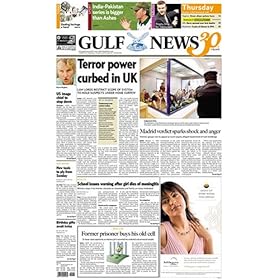
According to Nielsen (1999), what would be a great format for print design wouldn’t necessarily be the ideal format for a web design. This basically means that different approaches need to be taken in order to be able to design efficiently for both mediums.
Similarly, an online version of a newspaper will be different from a hard copy of the same publication.
You wouldn’t expect the same long text that appears in a print version of a newspaper to appear in the online version. This is because readers tend to be impatient and wouldn’t want to read long chunks of text on the computer screen. Instead, what they do is scan over the text picking out key phrases or sentences that would give them a gist of the article. (Nielsen, 1997)
According to Walsh (2006, p.32), the use of hyperlinks on a website is meant for the purpose of segmenting the information into framed sections so that a reader can choose exactly what he/she wants to read.

Print design uses the three layout systems; information value where elements placed on the left is known as Given and is known to the reader, elements placed on the right is known as New and is new information to the reader and salience and framing by using different means to attract the reader’s attention.(Kress & van Leeuwen, p.4-5,1998)
References
Kress, G & van Leeuwen, T 1998, ‘Front Pages: (The Critical) Analysis of Newspaper Layout’, Approaches to media discourse, Blackwell, Oxford
Nielsen, J 1997, Writing for the Web, Alertbox, viewed 10 November 2008, http://www.useit.com/alertbox/9703b.html
Nielsen, J 1999, Differences Between Print Design and Web Design, Alertbox, viewed 10 November 2008, http://www.useit.com/alertbox/990124.html
Walsh, M. 2006, ‘Textual shift’: Examining the reading process with print, visual and multimodal texts, Australian Journal of Language and Literacy, vol.29, no.1, p.24-37. (UNISA electronic library)
New Media Trends
It is evident that the digital revolution is having a considerable impact on our lives and shaping the way we think.
This fact was proven during the United States 2008 Elections when the presidential candidate, Barack Obama, now the United States President Elect used digital media to reach as many voters as possible for his campaign by appearing on You-tube commercials, creating web pages on social networking websites such as Facebook and introducing the Obama I-phone application. (Lieberman, 2008)
According to Wright Jr. (2008), a large number of people are using new forms of media to obtain the latest information.
New forms of media include:
i) Blogs
ii) Webcasts
iii) Podcasts
iv) Video Blogs
v) Social Networking websites
vi) Discussion groups
vii) RSS Feeds
During the US Elections, even though traditional media such as television, radio and newspapers produced a great deal of coverage of the event, virtual communities and bloggers played a huge role in the way this event was viewed worldwide. (Gollis, 2008)
References
Gollis, A 2008, New Media and the US Election, BBC News, viewed 9 November 2008, http://news.bbc.co.uk/2/hi/uk_news/7705280.stm
Lieberman, S 2008, Youth and the Web: The Political Campaign Game-Changer, TechNewsWorld, viewed 9 November 2008, http://www.technewsworld.com/story/64643.html?wlc=1226555031
Wright Jr, N 2008, New Media/Web 2.0, Dimension X, viewed 9 November 2008, http://dxadvertising.com/dxintel/dxarticles/48-new-media-and-web-20
__________________________________________
Subscribe to:
Posts (Atom)

